6 Best Website Builders for Medical Practice: Expert Picks
Patients now research their doctor online before they ever pick up the phone.
According to the CDC's National Health Interview Survey, 58.5% of US adult used the internet to look for health or medical information. Moreover, 41.5% used it to communicate with a doctor or a doctor's office.
That means your website is working or losing you patients 24 hours a day. The right website builder gives your practice credibility, online booking, and HIPAA-ready tools from day one.
But the best website builder combines ease of use, healthcare-specific features, and reliable compliance support.
Read on to find the 6 best website builders built specifically for medical practices.
Key Takeaways:
The right medical website builder directly impacts patient conversions.
HIPAA-compliant builders protect patient data and ensure legal safety.
Builders with built-in scheduling drive more appointment bookings.
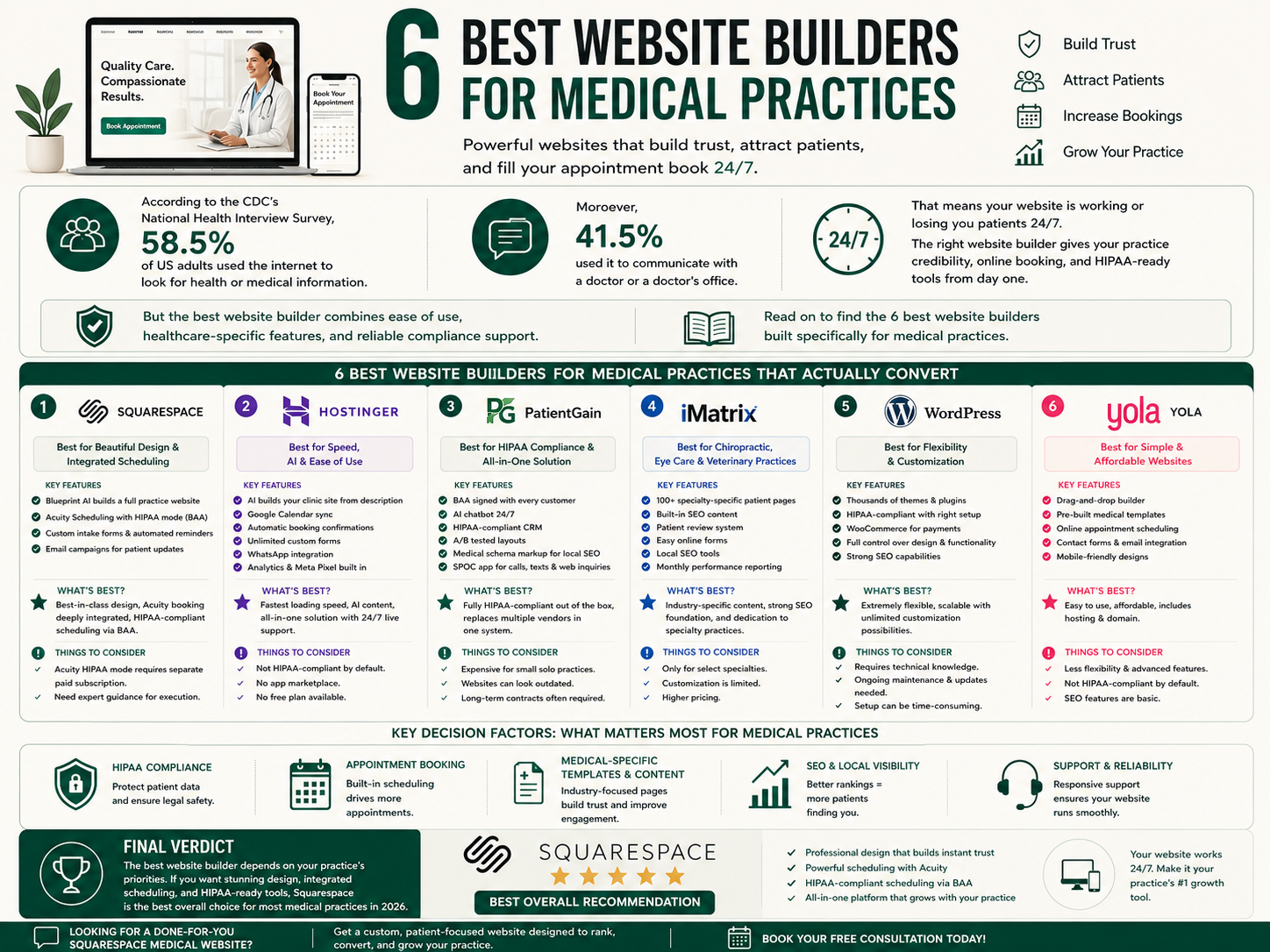
6 Best Website Builders for Medical Practice That Actually Convert
1. Squarespace
Squarespace is one of the most design-focused website builders available. For medical practices, it stands out by combining award-winning visuals with practical patient tools.
Its Blueprint AI Builder, named one of TIME's Best Inventions of 2025, creates a complete medical website from a few simple inputs.
It generates page content, branded visuals, and layout suggestions within minutes.
Acuity Scheduling integrates directly into your site, so patients can book appointments, complete intake forms, and get reminders without leaving the page.
You can also configure Acuity as HIPAA-compliant on select plans by signing a Business Associate Addendum with Squarespace.
Key Features
Here is what makes Squarespace specifically strong for doctors, dentists, and clinic websites:
Blueprint AI builds a full practice website from your brand details
Acuity Scheduling embeds appointment booking directly into your site
Customizable patient intake forms collected at time of booking
Automated appointment confirmations, reminders, and follow-ups
Acuity HIPAA mode available with BAA on Powerhouse or Premium plan
Squarespace Email Campaigns sends branded clinic updates to patients
What’s Best?
Best-in-class design builds instant patient trust
Acuity booking deeply integrated into the site
HIPAA-compliant scheduling available via BAA
AI handles design, content, and page structure
Things to Consider
Acuity HIPAA mode requires a separate paid subscription
Need expert guidance for execution.
Looking for a Done-For-You Squarespace Medical Website?
Squarespace becomes genuinely powerful when the right expert builds it. by Crawford combines deep Squarespace expertise with healthcare design understanding.
Your practice gets a clean, patient-friendly website built to rank, convert, and grow. Book your free consultation today.
2. Hostinger
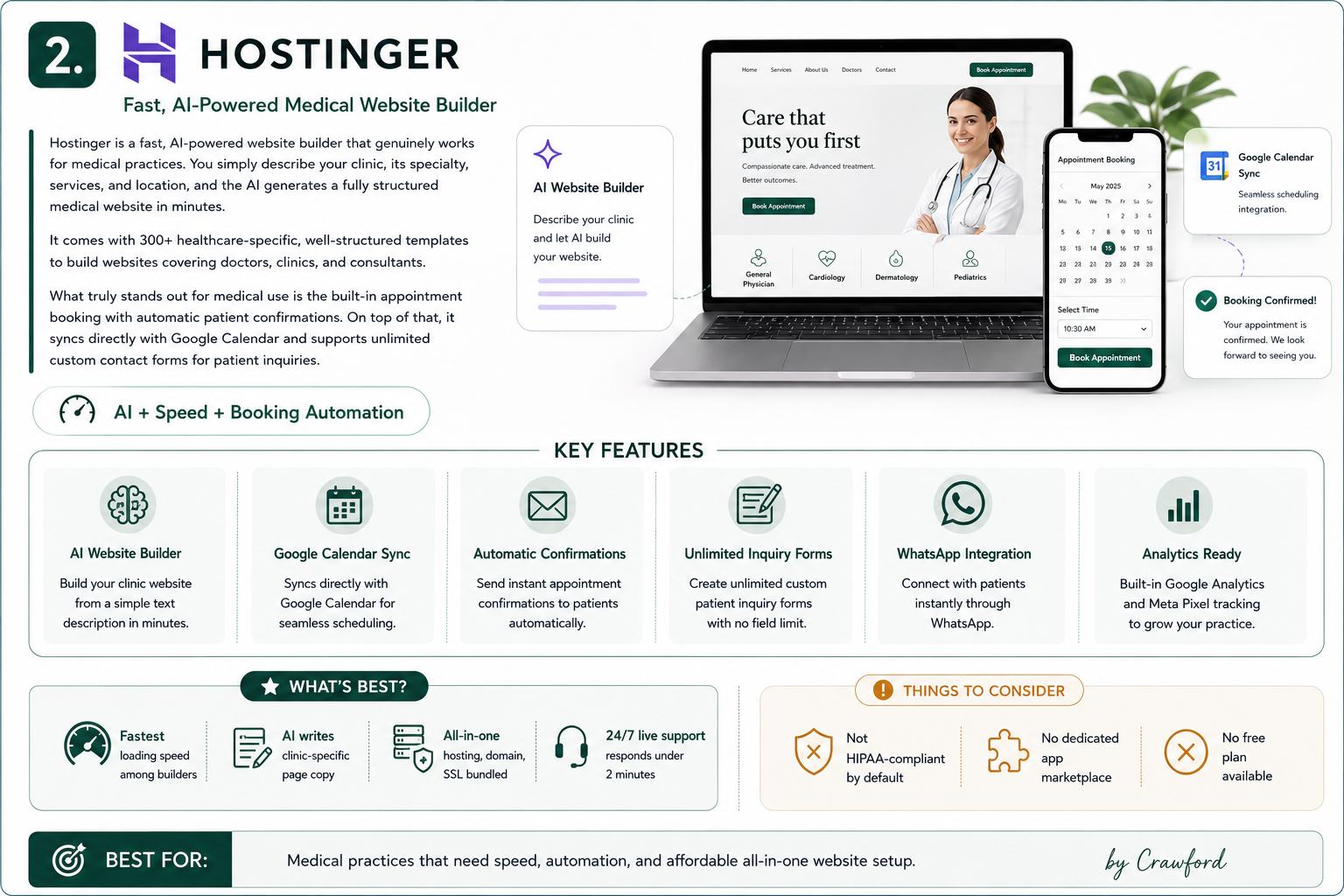
Hostinger is a fast, AI-powered website builder that genuinely works for medical practices. You simply describe your clinic, its specialty, services, and location, and the AI generates a fully structured medical website in minutes.
It comes with 300+ healthcare-specific, well-structured templates to build websites covering doctors, clinics, and consultants.
What truly stands out for medical use is the built-in appointment booking with automatic patient confirmations. On top of that, it syncs directly with Google Calendar and supports unlimited custom contact forms for patient inquiries.
Key Features
Here's what makes Hostinger specifically strong for medical websites:
AI builds your clinic site from a text description
Google Calendar syncs directly with appointment bookings
Automatic patient booking confirmations sent instantly
Unlimited custom patient inquiry forms, no field limit
WhatsApp integration for instant patient communication
Google Analytics and Meta Pixel tracking built in
What’s Best?
Fastest loading speed among builders
AI writes clinic-specific page copy
All-in-one: hosting, domain, SSL bundled
24/7 live support, responds under 2 minutes
Things to Consider
Not HIPAA-compliant by default
No dedicated app marketplace
No free plan available
3. PatientGain
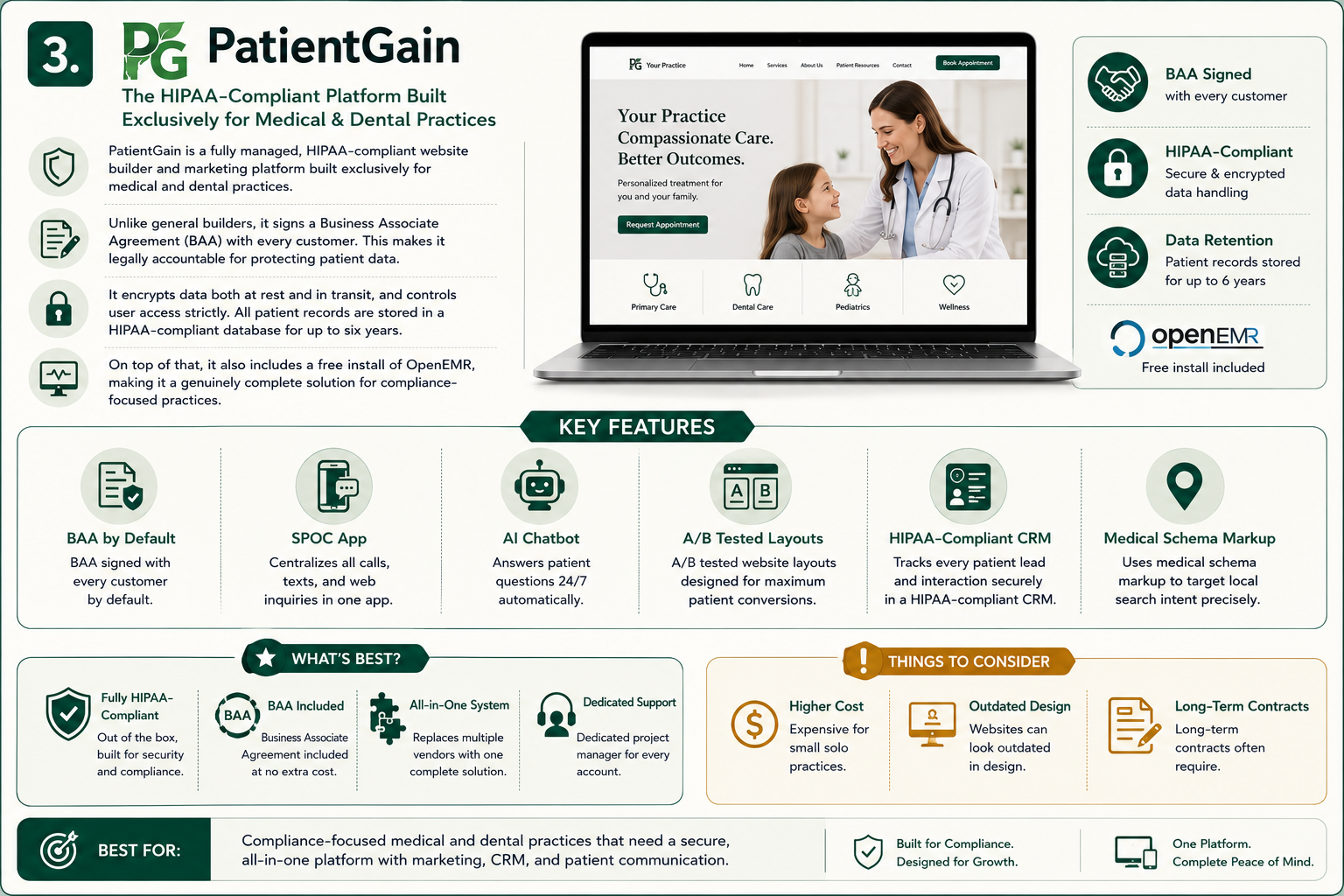
PatientGain is a fully managed, HIPAA-compliant website builder and marketing platform. It is built exclusively for medical and dental practices.
Unlike general builders, it signs a Business Associate Agreement (BAA) with every customer. This makes it legally accountable for protecting patient data.
Furthermore, it encrypts data both at rest and in transit, and controls user access strictly. All patient records are stored in a HIPAA-compliant database for up to six years.
On top of that, it also includes a free install of OpenEMR, making it a genuinely complete solution for compliance-focused practices.
Key Features
Here's what makes PatientGain truly specific to medical website needs:
BAA signed with every customer by default
SPOC app centralizes all calls, texts, and web inquiries
AI chatbot answers patient questions 24/7 automatically
A/B tested website layouts designed for patient conversions
HIPAA-compliant CRM tracks every patient lead and interaction
Medical schema markup targets local search intent precisely
What’s Best?
Fully HIPAA-compliant out of the box
BAA included at no extra cost
Replaces multiple vendors in one system
Dedicated project manager per account
Things to Consider
Expensive for small solo practices
Websites can look outdated in design
Long-term contracts often require
4. iMatrix
iMatrix is a healthcare website builder designed for chiropractic, eye care, and veterinary practices. It does not serve general businesses.
Instead, it focuses entirely on helping specialty medical practices get found online and convert visitors into booked patients. Every website comes preloaded with over 100 pages of industry-specific patient education content.
On top of that, it includes a dedicated analytics portal to track website visits, call data, and form fills. It is also backed by unlimited one-on-one US-based phone support.
Key Features
Here's what makes iMatrix stand out specifically for healthcare practices:
50+ professionally designed specialty healthcare templates
Preloaded industry-specific patient education content included
Dedicated analytics portal tracks calls, visits, and leads
Online booking system built directly into every website
Patient reviews displayed prominently on the homepage
Secure custom lead capture forms collected before patient visits
Live social media posts from Instagram and Facebook displayed on-site
What’s Best?
Built exclusively for healthcare practices
Preloaded patient education content saves time
Unlimited edits with real human support
Google Premier Partner certified
Things to Consider
Limited to three specialty practice types
Not suitable for general medical practices
Pricing not publicly listed
5. WordPress
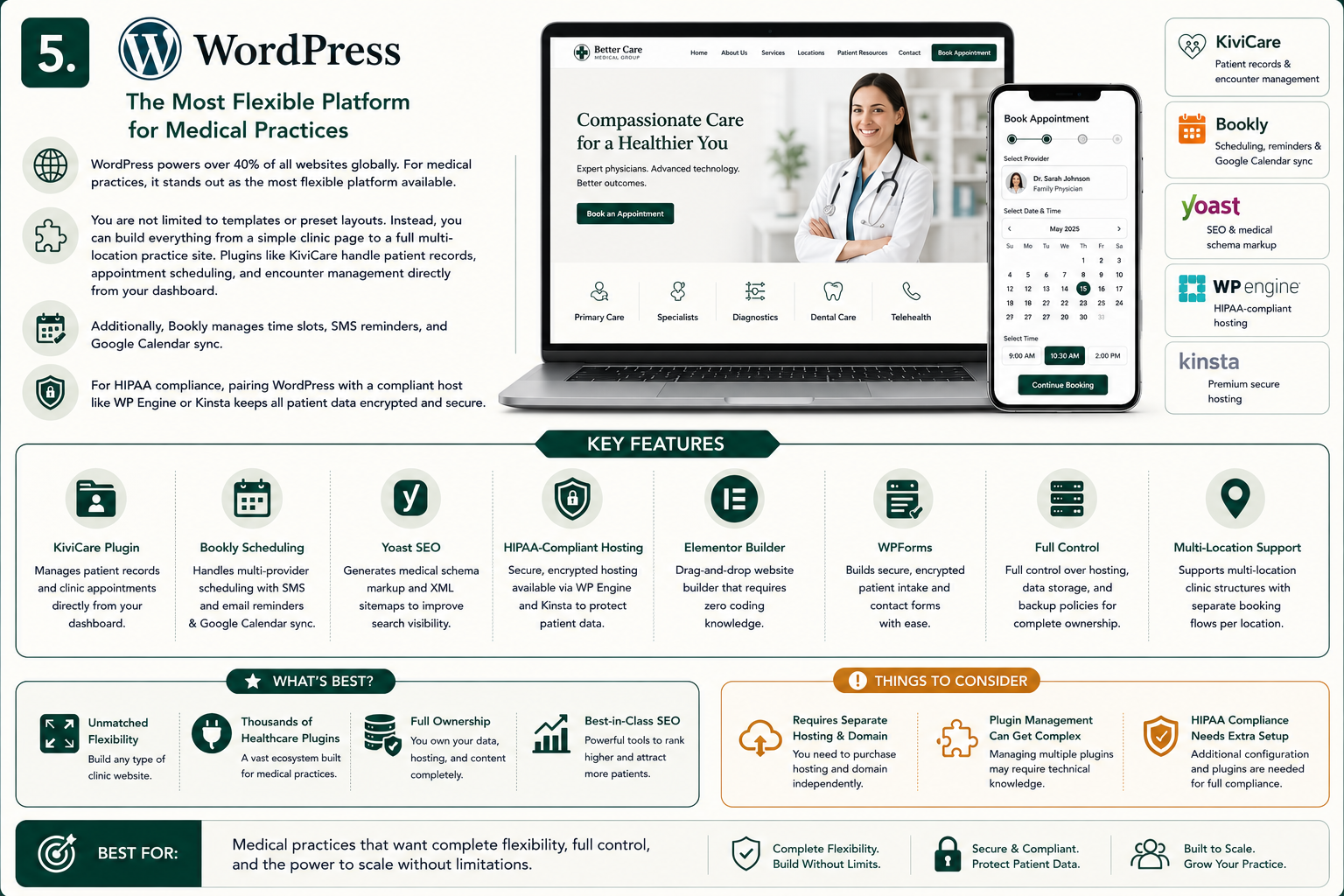
WordPress powers over 40% of all websites globally. For medical practices, it stands out as the most flexible platform available.
You are not limited to templates or preset layouts. Instead, you can build everything from a simple clinic page to a full multi-location practice site. Plugins like KiviCare handle patient records, appointment scheduling, and encounter management directly from your dashboard.
Additionally, Bookly manages time slots, SMS reminders, and Google Calendar sync. For HIPAA compliance, pairing WordPress with a compliant host like WP Engine or Kinsta keeps all patient data encrypted and secure.
Key Features
Here's what makes WordPress genuinely powerful for medical practice websites:
KiviCare plugin manages patient records and clinic appointments
Bookly handles multi-provider scheduling with SMS and email reminders
Yoast SEO generates medical schema markup and XML sitemaps
HIPAA-compliant hosting available via WP Engine and Kinsta
Elementor drag-and-drop builder requires zero coding knowledge
WPForms builds secure encrypted patient intake forms
Full control over hosting, data storage, and backup policies
Supports multi-location clinic structures with separate booking flows
What’s Best?
Unmatched flexibility for any practice size
Thousands of healthcare-specific plugins available
Full ownership of your data and hosting
Best-in-class SEO capabilities
Things to Consider
Requires separate hosting and domain setup
Plugin management can get complex
HIPAA compliance needs extra configuration
6. Yola
Yola is a smart, affordable medical website builder that makes it genuinely easy for medical professionals to launch a polished online presence. Its AI Sitebuilder takes your practice details and generates a complete, ready-to-customize website within minutes. No coding knowledge is needed at any stage. It comes with mobile-responsive templates designed specifically for medical clinics, primary care physicians, and specialist services. Furthermore, each plan includes built-in fast hosting, a free custom domain, Yola Mail for a professional practice email address, automatic backups, and free universal SSL security.
Key Features
Here is what makes Yola a strong option for medical practice websites:
AI Sitebuilder generates full clinic website from your practice details
AI Design Assistant optimizes layout, color contrast, and white space automatically
AI Block Assistant instantly refreshes service descriptions and doctor bios
AI Text Assistant writes and refines page copy without starting from scratch
Traffic Builder scans your site and identifies SEO errors, missing keywords, and ranking opportunities
Automatic SEO monitoring tracks your positions across Google, Yahoo, and Bing
What’s Best?
All-in-one: hosting, domain, email, and SSL included
Multiple AI tools cover design, content, and SEO together
Fast setup with healthcare-specific templates
100% uptime reliability reported by long-term users
Things to Consider
Advanced SEO tools locked behind Gold plan only
No native appointment booking system built in
Not HIPAA-compliant for patient data handling
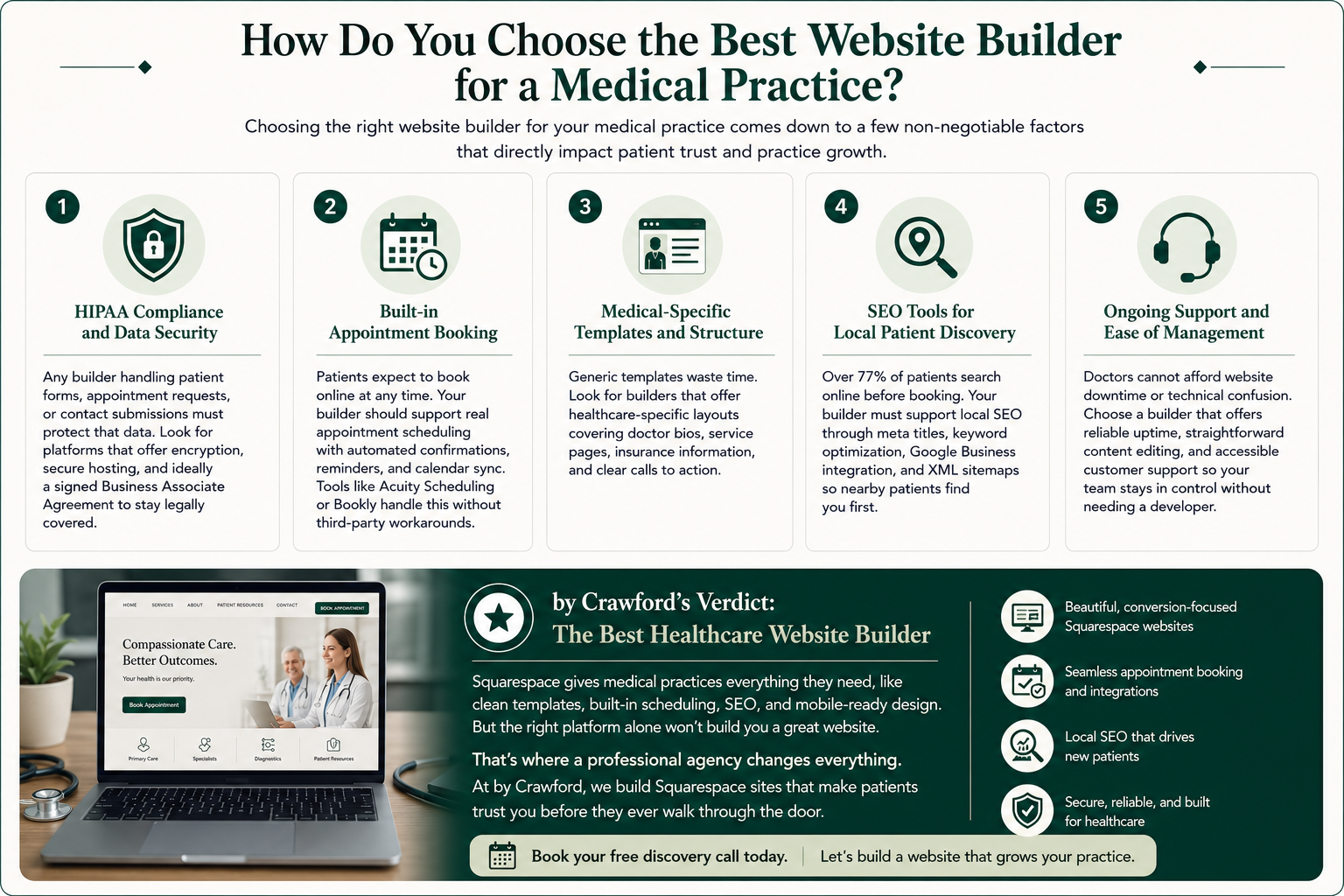
How Do You Choose the Best Website Builder for a Medical Practice?
Choosing the right website builder for your medical practice comes down to a few non-negotiable factors that directly impact patient trust and practice growth.
HIPAA Compliance and Data Security
Any builder handling patient forms, appointment requests, or contact submissions must protect that data. Look for platforms that offer encryption, secure hosting, and ideally a signed Business Associate Agreement to stay legally covered.
Built-in Appointment Booking
Patients expect to book online at any time. Your builder should support real appointment scheduling with automated confirmations, reminders, and calendar sync. Tools like Acuity Scheduling or Bookly handle this without third-party workarounds.
Medical-Specific Templates and Structure
Generic templates waste time. Look for builders that offer healthcare-specific layouts covering doctor bios, service pages, insurance information, and clear calls to action.
SEO Tools for Local Patient Discovery
Over 77% of patients search online before booking. Your builder must support local SEO through meta titles, keyword optimization, Google Business integration, and XML sitemaps so nearby patients find you first.
Ongoing Support and Ease of Management
Doctors cannot afford website downtime or technical confusion. Choose a builder that offers reliable uptime, straightforward content editing, and accessible customer support so your team stays in control without needing a developer.
by Crawford’s Verdict: The Best Healthcare Website Builder
Squarespace gives medical practices everything they need, like clean templates, built-in scheduling, SEO, and mobile-ready design. But the right platform alone won't build you a great website.
That's where a professional agency changes everything. At by Crawford, we Squarespace sites that make patients trust you before they ever walk through the door. Book your free discovery call today.
Frequently Asked Questions
-
Yes, any website that collects patient information must meet HIPAA standards. This includes contact forms, appointment booking, and patient portals.
-
Costs range from $3,000 for a basic professional build to $50,000+ for a fully custom healthcare website. The more complex your needs, the higher the build cost and the stronger the patient conversion rate.
-
Every medical website needs a homepage, services page, about page, contact page, and online booking page. A blog and patient resources page also build long-term trust and SEO rankings.