Should You Use Squarespace for Your Ecommerce Brand?
People love to hate on Squarespace when it comes to ecommerce.
If you listen to the internet, you’ll hear claims like:
“Squarespace is too simple for real online stores.”
“It’s not built for serious sellers.”
“You’ll quickly hit a ceiling.”
But here’s the reality:
We’ve built Squarespace stores that generate multi-seven figures in revenue. Stores selling custom products, digital goods, appointments, memberships - you name it, we’ve built it.
So in this post, we’re going to cut through the myths and look at the real question:
Is Squarespace actually a good platform for ecommerce and is it the right choice for your brand?
Let’s break it down.
What Squarespace Does REALLY Well for Ecommerce
1. Unmatched Design Control
One of the biggest advantages Squarespace has over platforms like Shopify is design freedom.
On Shopify, your product pages are often limited by your theme. You don’t get much granular control over how they look.
Squarespace is different.
With Squarespace, your product pages can look just as beautiful and on-brand as the rest of your website.
This is especially important for:
Fashion brands
Lifestyle products
Wellness businesses
Creative entrepreneurs
If aesthetics and brand storytelling matter to you, Squarespace gives you far more flexibility to create a cohesive, high-end shopping experience.
2. Built-In Ecommerce Tools
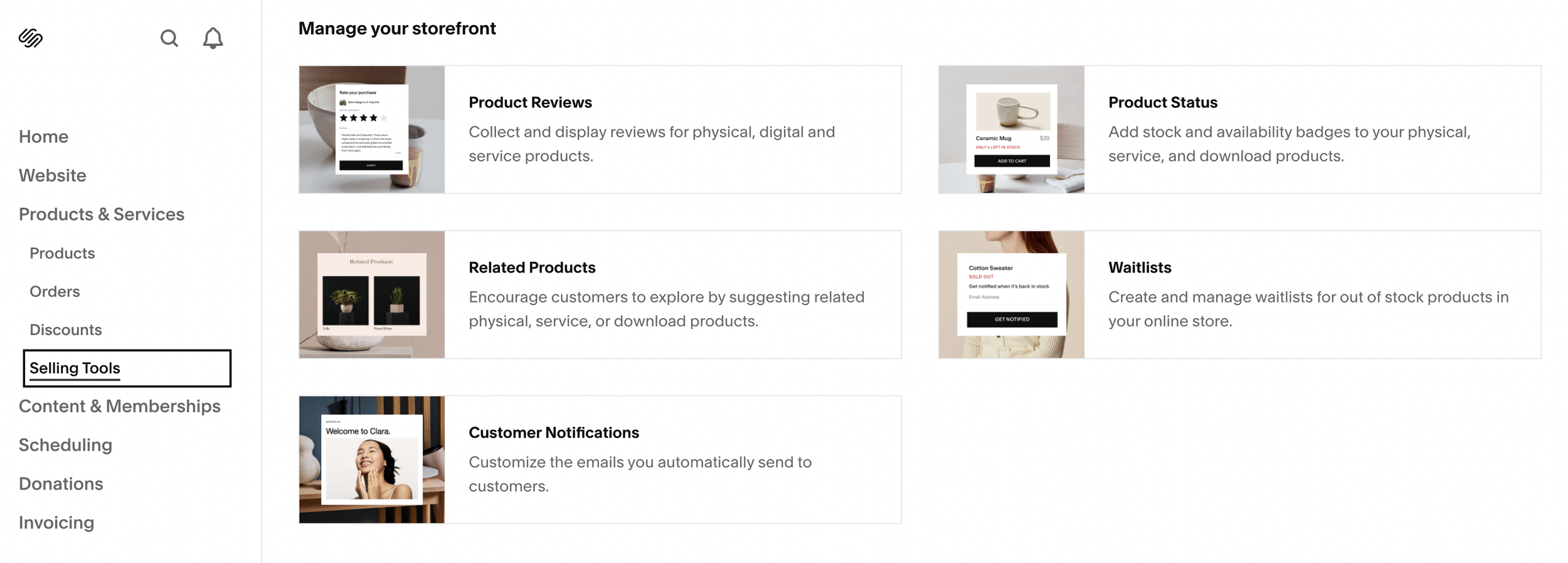
Another major strength of Squarespace is its all-in-one ecosystem.
Most of the tools you need to run an online store are already built directly into the platform. You don’t need to bolt together dozens of third-party apps just to make things work.
Squarespace includes:
Product and inventory management
Product variants
Subscriptions
Digital product sales
Appointment booking via Acuity
Ticketing
Abandoned cart recovery
Email automations
Everything works together seamlessly without complicated integrations.
This built-in functionality is Squarespace’s biggest advantage over platforms like Shopify or Drupal, where you often need multiple plugins just to replicate basic features.
3. Clean, Simple User Experience
Squarespace isn’t just great for customers, it’s great for business owners too.
The backend dashboard is:
Clean
Intuitive
Easy to navigate
Simple to manage
You can run your entire business from one place.
Need to:
Add a new product?
Update pricing?
Change text for a sale?
Manage orders?
You can do it all quickly without breaking your site.
Squarespace sites are also incredibly stable. It’s genuinely hard to “mess things up,” which gives business owners a huge sense of control and confidence.
4. Great for Teams and Growing Businesses
If you have a team helping manage your store, Squarespace makes that easy too.
You can:
Add multiple users
Assign permissions
Control who can edit what
This is perfect for businesses that need staff members to manage orders, update products, or handle customer service.
Start, scale & systemise your web design agency.
I bootstrapped my agency from zero to seven figures. The Margin is the operating system I wish I'd had.
Join The Margin


Need an expert to build your Squarespace website?
Book a free kick-off call with our team to discuss your project requirements in detail.
The Limitations of Squarespace for Online Stores
Squarespace is powerful but it’s not perfect.
There are a few areas where it falls short compared to more complex platforms like Shopify.
1. Limited Upsell and Cross-Sell Features
One of the biggest gaps in Squarespace ecommerce is upsell logic.
Features like:
“You may also like…”
Suggested products in the cart
Post-purchase upsells
These are common on Shopify but not built into Squarespace.
If advanced cross-selling is a big part of your sales strategy, this could feel limiting.
2. Fewer Third-Party Integrations
Shopify has an enormous app marketplace with thousands of plugins.
Squarespace takes a different approach.
Instead of relying heavily on external apps, Squarespace prefers an all-in-one system. That means fewer official integrations.
There is an Extensions Marketplace with tools like:
SEO Space for advanced SEO
Accounting tools
Shipping integrations
But overall, the ecosystem is smaller and more controlled than Shopify’s.
For many businesses this is a benefit but for others it can feel restrictive.
3. Complex Fulfillment Needs Can Be Tricky
If your store requires advanced logistics, Squarespace might struggle.
Examples include:
Multi-location inventory
Complex fulfillment rules
Custom checkout flows
Loyalty programs
We recently worked with a large enterprise client who had:
11 pickup locations
Different time slots per location
Custom inventory rules
Squarespace couldn’t handle that natively, so we had to build a custom script to make it work.
On Shopify, something like this would likely be solved with an app or simple configuration.
4. Extreme Scalability Limits
Squarespace can handle a lot but it’s not built for massive enterprise-level stores.
If you plan to run:
10,000+ products
Huge catalogs
Very complex product databases
Then Shopify or another enterprise platform may be a better long-term fit.
That said…
Who Is Squarespace Perfect For?
Here’s the honest truth:
For about 9 out of 10 online businesses, Squarespace is more than capable.
Squarespace is ideal if you:
Want a beautiful, brand-focused store
Sell physical or digital products
Offer services or bookings
Don’t need extreme custom logic
Prefer simplicity over technical complexity
We’ve worked with clients running thousands of SKUs and thriving entirely on Squarespace.
Final Verdict: Is Squarespace Good for Ecommerce?
Absolutely, as long as it fits your needs.
Squarespace excels at:
Design
Simplicity
Built-in tools
Ease of management
It struggles with:
Advanced upsells
Complex logistics
Massive product catalogs
But for the vast majority of brands, creators, and businesses, Squarespace is a powerful, reliable, and professional ecommerce platform.